
If you’re starting out in music photography, here’s a guide by Todd Owyoung to choosing the right gear that can help make nailing those photos a little easier.
1. Gear overview
When you’re working with available light, photographing fast action with limited time and access, choosing the right camera gear can make the work easier.
First, it’s worth stating that you can photograph music with any camera. Even your phone. Or a point and shoot, or an entry-level mirrorless camera with its kit lens.
The purpose of this guide is to recommend gear that can make the job of photographing a concert simple. The cameras and lenses suggested here are proposed as solutions to the common challenges of live music: low light and fast action.
You’ve probably seen images taken in low light that are either blurry due to a longer exposure, grainy or with otherwise poor image quality, or lacking in fine detail due to noise reduction. All of these are the effects of various solutions to low light.
If you want to photograph a live performance without motion blur, excessive digital noise and with the best relative image quality, use this guide as a starting point.
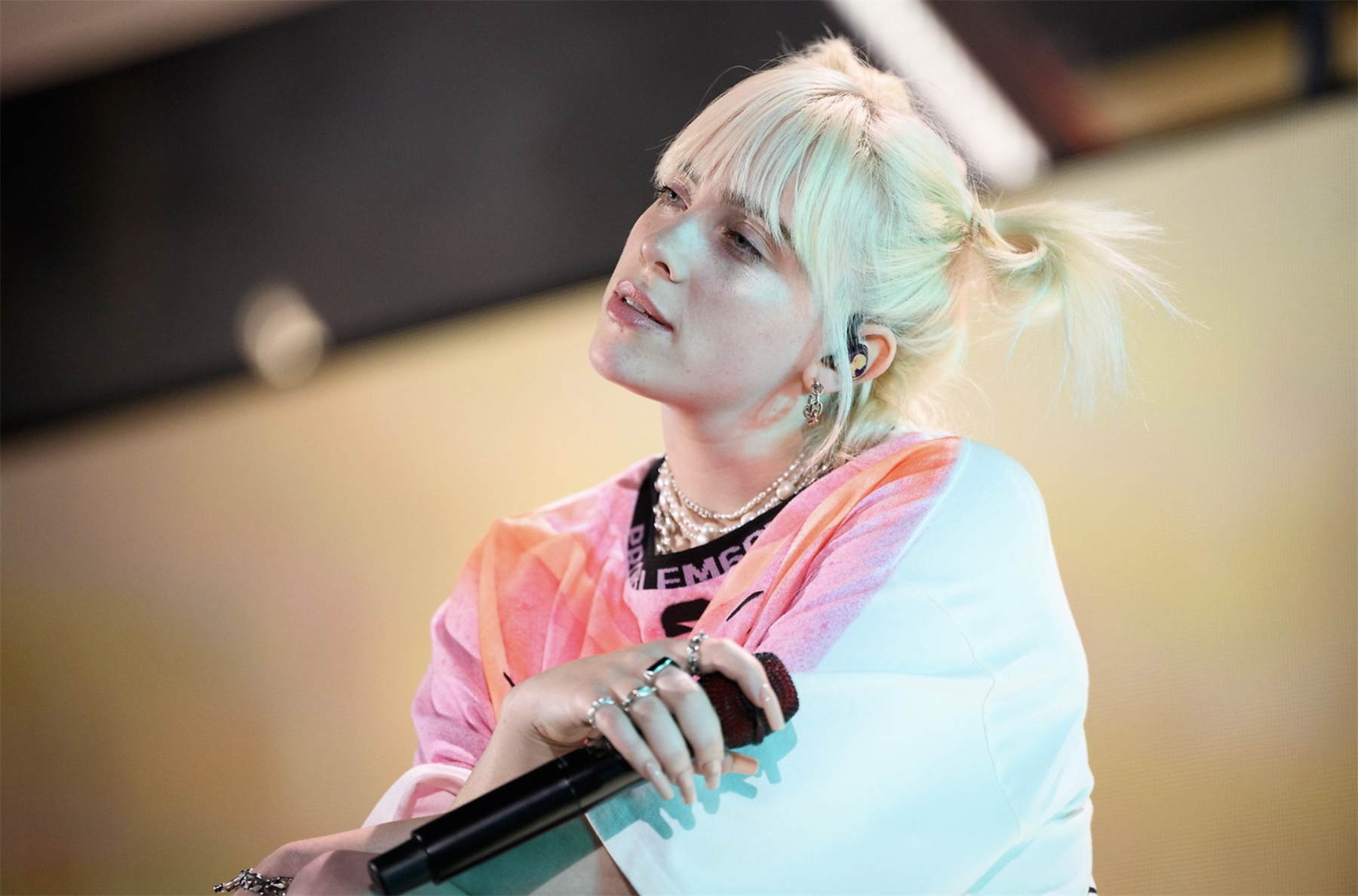
Photo courtesy of Todd Owyoung
2. Camera overview
Point and shoots
If you’re looking for a camera you can take into shows as a fan without restrictions, a point and shoot without a detachable lens can be a great entry point into music photography.
The benefit of a point and shoot is that you don’t need special permission to bring it into many music venues, so you won’t need the accreditation that press photographers are required to have for more professional cameras.
Look for models that have a modest zoom range with an aperture range from f/1.8 to f/2.8. Most importantly, look for a model that shoots RAW, which will give you the ability to adjust exposure and colour without sacrificing quality.
Mirrorless cameras
Realistically, any mirrorless camera with detachable lenses can be used to photograph live music and will present a big step up in image quality over a point and shoot.
The most common sensor sizes are the smaller APS-C format and full-frame, which has an image sensor the same size as a frame of 35mm film. Image sensor size, combined with resolution and lens choice, dictates how well a camera can perform in low light.
Perhaps more important than sensor size, autofocus is an important factor of live music photography. You ideally want a camera that can focus accurately in low light, but also track moving subjects with precision.
Thankfully, basically all new models from the current generation of mirrorless cameras across every brand offer great autofocus performance.
DSLRs
If you’re on a budget, a used DSLR camera can offer a ton of value. As many photographers have moved to mirrorless, DSLRs are still a fantastic option that offer equivalent image quality.
While you miss out on some ease-of-use benefits that mirrorless offers, image quality even for older cameras remains very competitive, and you’ll get large savings buying used.
3. Lens overview
If you’re just starting out in music photography, there’s a good chance you’re photographing in smaller venues. The irony of photographing in more humble rooms is that they’re more likely to be demanding on gear than larger, well-lit venues.
Faster zoom lenses and prime lenses can be a huge help for making the most of limited lighting in clubs.
For most beginners, a range of about 24mm to 85mm on a full-frame, 35mm-equivalent camera is ideal for venues like bars, clubs and music halls with more limited angles, low stages and the ability to shoot from the front of the stage.
50mm f/1.8 prime
A 50mm prime is a classic in photography, offering a natural perspective that is neither too wide nor super tight on full-frame.
This focal length can be well suited to small and medium-sized venues, where the 50mm focal length can be good for half-length images of an individual performer.
These lenses are also among the most affordable lenses from most manufacturers, making them a great choice if your budget is tight.
35mm f/1.8 prime
Alternatively, a 35mm prime can be a great choice for small venues, giving a wider perspective compared to a 50mm.
On an APS-C camera, it will give the same rough field of view as a 50mm lens on full-frame.
24mm f/1.8 prime
A 24mm prime is great for showing more of the environment and is well suited to small venues.
This focal length is more ideal for near-full-length images of a performer on stage or for photographing multiple band members in the same frame.
A 24mm or 28mm lens pairs well with a 50mm lens as a two-lens kit for small venues, with a good visual distinction and use for each lens with very different looks.
24–70mm f/2.8 zoom
Just about every major lens manufacturer offers a 24–70mm f/2.8 zoom, so there are options at varying price points.
A 24–70mm lens is a utilitarian range that offers you the benefits of a wide angle and modest telephoto in a single lens. For smaller venues, this range can be an ideal one-lens solution.
While more expensive than most prime lenses in the same range, the 24–70mm f/2.8 is also a staple in the kits of most professional photographers, so it’s a lens that will serve you well as you shoot in larger venues and beyond.
70–200mm f/2.8 zoom
If you’re graduating to shooting in larger venues, a 70–200mm f/2.8 telephoto lens can help address larger distances, taller stages and help create dynamic close-up photos of performers.
A 70–200mm is a staple of festivals, where this zoom range is ideal for large stages.